Grease traps and local food service businesses
Ripon lies east of Tracy in San Joaquin County. Keep service records where you can find them, including details of each cleanout. Grease rises from wastewater inside the trap, and accumulated material can eventually restrict the outlet. That can leave a sink draining slowly during cleanup.
A small indoor trap often sits beneath a sink or a floor cover. Ask about grease trap pumping for that equipment. An interceptor is usually buried, with covers for access; larger units are emptied by vacuum truck. For grease interceptor pumping, a provider serving Ripon can suggest a schedule based on kitchen use and local requirements.
Grease trap services in Ripon, CA
Grease Trap Pumping
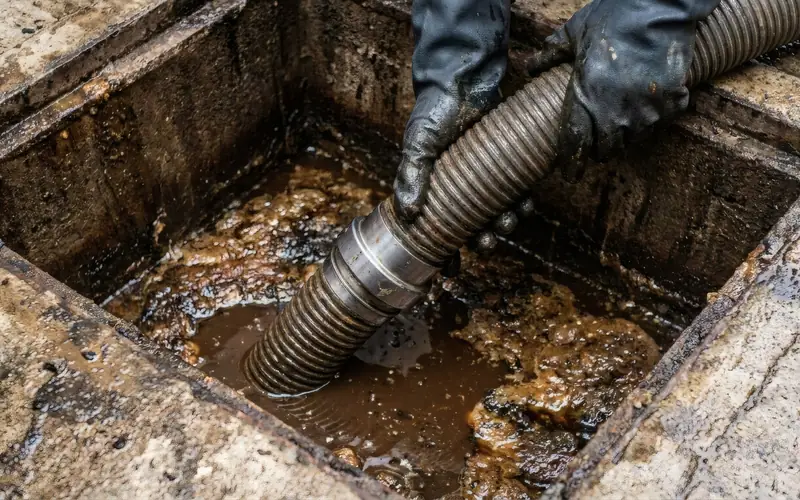
Keep the last service receipt handy if your kitchen trap needs emptying and you are unsure what was removed. When arranging grease trap pumping, ask whether the provider will remove settled food scraps as well as grease and wastewater. Pumping generally takes the accumulated contents out of the trap.
Grease Trap Cleaning
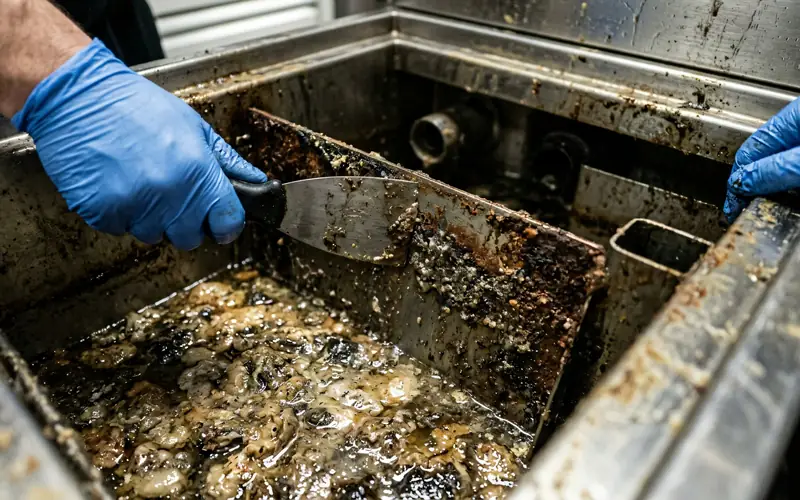
Does cleaning include the accessible outlet tee? Grease around that opening can restrict wastewater flow, so it is worth asking when arranging grease trap cleaning. Cleaning generally includes emptying the trap and clearing deposits from reachable interior surfaces, including the baffle and walls.
Grease Interceptor Cleaning
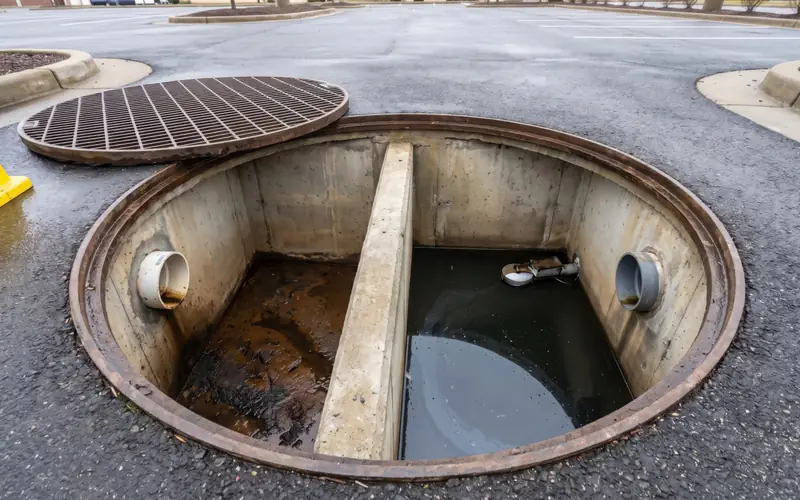
Interceptor cleaning goes beyond pumping out the contents by addressing deposits attached to reachable surfaces. Consider grease interceptor cleaning when the tank has been emptied but grease remains on the walls or baffles. Deposits around an accessible outlet can also restrict the passage of wastewater.
Grease Interceptor Pumping
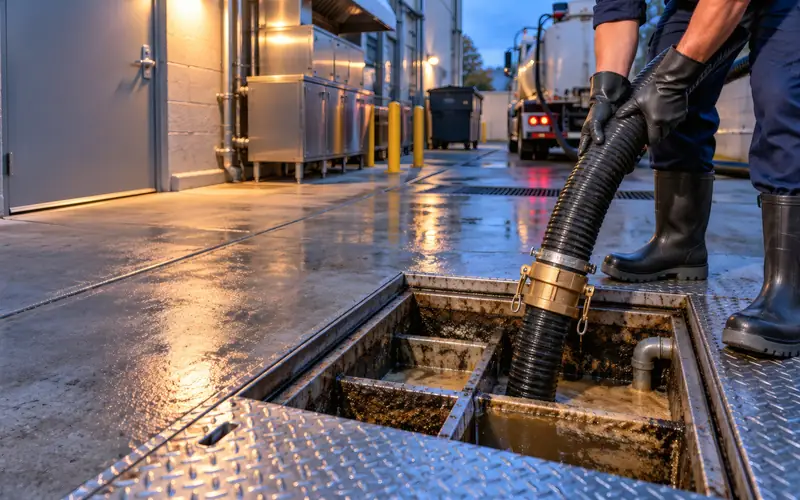
Interceptor pumping generally includes removing accumulated grease, wastewater and settled solids from the tank. A kitchen usually needs grease interceptor pumping when the contents have built up and the unit needs emptying. Your city or sewer district sets the schedule, so check the requirements that apply to your kitchen.
What to Have Ready When You Call
A few details can help the service provider assess your needs and discuss the right appointment.
- Your service address and ZIP code.
- Whether you have an indoor grease trap or an outdoor interceptor.
- The unit’s size, if known.
- Approximately when it was last pumped.
- Any backup, odors, slow drainage, or inspection deadline.
- The number of units or locations needing service.
Share what you know. You do not need every detail before calling.
Local grease trap requirements
Sewer service in Ripon is provided by the City of Ripon.
Local rules shape how you plan grease trap maintenance. The city or sewer district serving your address usually sets those requirements. Before deciding on service dates, ask which cleaning schedule applies, what documentation to maintain, and if a permit is necessary. Save the hauler’s record after each visit.
Source: cityofripon.org
Nearby service areas
The same number reaches providers serving nearby areas. Businesses with more than one location can call once per site and enter each ZIP code.
Common grease trap questions
How often do Ripon restaurants need grease trap pumping?
A small trap receiving heavy kitchen flow may need attention sooner than a larger unit. The menu and local requirements also affect the schedule. Your sewer utility may also set a schedule or a fullness limit, so ask it before you settle on one. Ask a provider to suggest timing for your kitchen.
Do providers serving Ripon handle in-ground interceptors?
Many do, though availability varies. Before calling, check whether you have an in-ground interceptor or an indoor grease trap and note its size if you know it. Ask whether the provider handles your equipment.
Who will I be speaking to when I call?
After the ZIP-code prompt, you will speak with an independent service provider serving your area. You can discuss the work, confirm pricing and availability, and book directly with that company. This website helps connect callers with service providers; it does not perform the cleaning.