Grease traps and local food service businesses
In Fremont, Alameda County, keep grease trap service records with your kitchen paperwork. Grease separates from wastewater inside the unit, and accumulated grease and solids can eventually restrict flow through the outlet. Slow drainage or standing water in a sink can be a sign that the unit needs attention, although a blocked drain line can cause similar trouble.
A small indoor trap often sits beneath a sink or a floor cover; ask about grease trap pumping for that equipment. An in-ground interceptor has access covers, and larger units are pumped with a vacuum truck. Call about grease interceptor pumping and ask a provider serving Fremont to suggest a schedule based on kitchen use and local requirements.
Grease trap services in Fremont, CA
Grease Trap Pumping
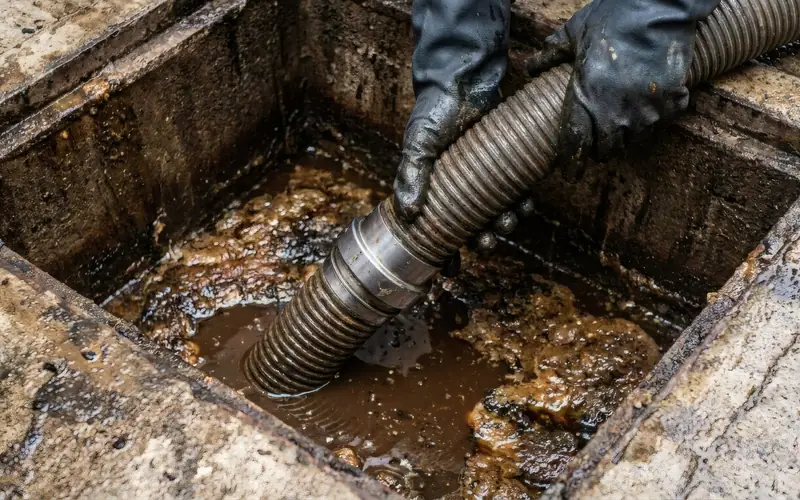
Keep your grease trap service receipt with your kitchen records, especially if the trap now needs emptying. When arranging grease trap pumping, ask whether settled food scraps will be taken out too. A pump-out typically removes those scraps along with the grease and wastewater.
Grease Trap Cleaning
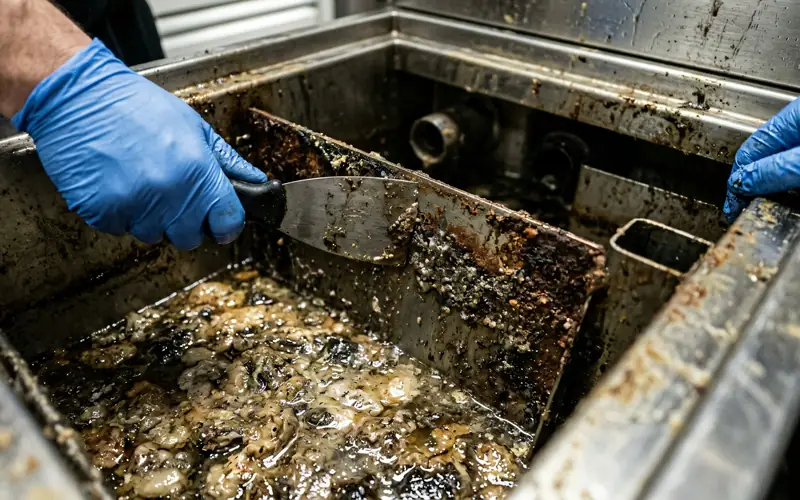
Will the accessible outlet tee be cleared? Ask about it when arranging grease trap cleaning, since deposits there can interfere with drainage. The work typically involves emptying the unit and removing grease stuck to parts that can be reached, including the baffle.
Grease Interceptor Cleaning
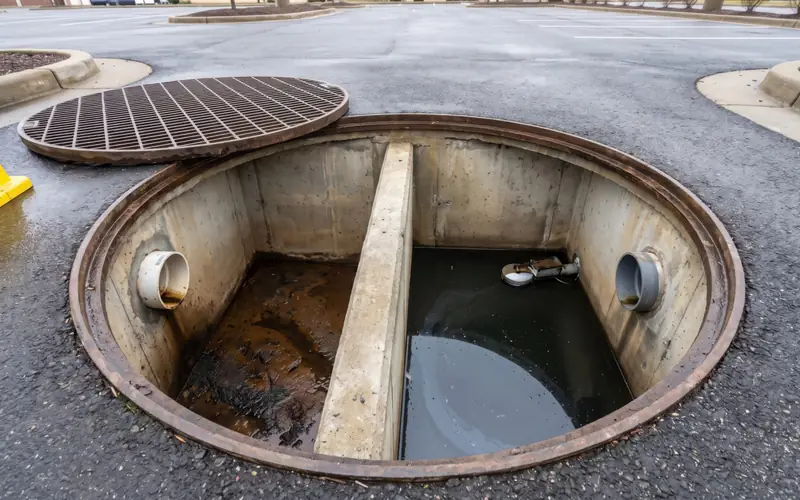
A pump-out takes material from the interceptor, while cleaning also addresses residue clinging to reachable surfaces. Choose grease interceptor cleaning when the tank needs emptying and its interior surfaces need attention. Deposits around the outlet can leave less room for wastewater to pass through.
Grease Interceptor Pumping
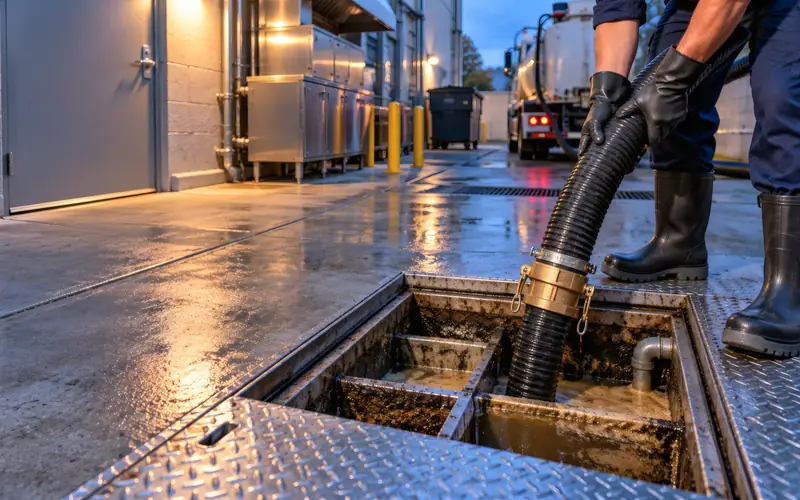
Grease, wastewater and food solids that have settled in an interceptor are typically taken out during pumping. A kitchen usually needs grease interceptor pumping once enough material has collected that the tank requires emptying. Knowing the tank’s location can help explain the setup.
What to Have Ready When You Call
A few details can help the service provider assess your needs and discuss the right appointment.
- Your service address and ZIP code.
- Whether you have an indoor grease trap or an outdoor interceptor.
- The unit’s size, if known.
- Approximately when it was last pumped.
- Any backup, odors, slow drainage, or inspection deadline.
- The number of units or locations needing service.
Share what you know. You do not need every detail before calling.
Local grease trap requirements
What the local rules say (Ordinance 38):
- Who they cover: The grease rules apply to all food service establishments.
- When a device is required: All food service establishments must be equipped with grease interceptors and/or grease traps.
- Haulers: Waste cooking oil must go to an approved waste hauler or an approved recycling facility.
- Registration and permits: For new construction, tenant improvements, and changes of business ownership, a Food Service Permit Application and Menu must be submitted to the District.
Rules can change, so confirm the current requirements with the city or sewer district before an inspection.
Sources: unionsanitary.ca.gov (fats oils and grease); unionsanitary.ca.gov (fog faq); unionsanitary.ca.gov (restaurant pollution prevention)
Nearby service areas
The same number reaches providers serving nearby areas. Businesses with more than one location can call once per site and enter each ZIP code.
Common grease trap questions
How often do Fremont restaurants need grease trap pumping?
Pumping schedules vary with the unit's capacity, menu choices, wastewater volume and local requirements. Your sewer utility may also set a schedule or a fullness limit, so ask it before you settle on one. Ask a provider to recommend timing that fits your operation, and keep service records to help track the schedule.
Do providers serving Fremont handle in-ground interceptors?
Many do. Before calling, check whether your equipment is an in-ground interceptor and note its size if known. Share those details on the call and ask about availability.
Who will I be speaking to when I call?
After the ZIP-code prompt, you will speak with an independent service provider serving your area. You can discuss the work, confirm pricing and availability, and book directly with that company. This website helps connect callers with service providers; it does not perform the cleaning.